
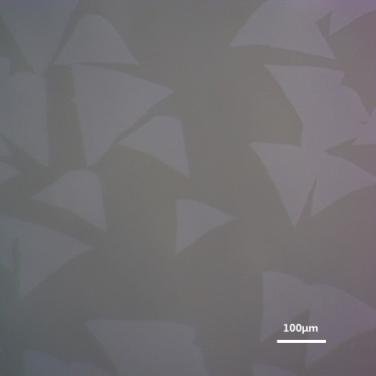
Tungsten Disulfide (WS₂)
CAS Number: 12138-09-9
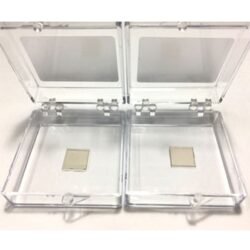
Substrate Size: 1 cm x 1 cm
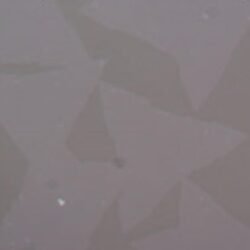
Preparation Method: Chemical Vapor Deposition (CVD)
Substrate Options:
WS₂ films are grown directly on sapphire substrates. Custom transfer to other substrates is available upon request-please visit our Custom Products page or contact us for assistance.
Fundamental Properties:
Tungsten disulfide (WS₂) is a layered transition metal dichalcogenide (TMD) with strong in-plane covalent bonding and weak van der Waals interactions between layers. Monolayer WS₂ has a direct bandgap of approximately 2.05 eV, making it highly efficient in light absorption and emission, particularly for optoelectronic applications. In its bulk form, WS₂ exhibits an indirect bandgap of around 1.35 eV. The bandgap of WS₂ varies with the number of layers, transitioning between direct and indirect as the thickness increases. WS₂ also displays remarkable photoluminescence, high thermal and chemical stability, and strong spin-orbit coupling, making it suitable for diverse advanced technologies. Its high mechanical flexibility and environmental robustness further enhance its usability in flexible and wearable devices.
Applications:
Optoelectronics: Monolayer WS₂ is ideal for photodetectors, light-emitting diodes, and laser devices due to its direct bandgap and strong light-matter interaction. Energy Storage and Conversion: WS₂ is a promising material for hydrogen evolution reactions (HER) in catalysis and as an active electrode material in lithium-ion batteries.
Microelectronics: Its thin, layered structure and excellent electronic properties make WS₂ an effective channel material for field-effect transistors (FETs).
Sensors: WS₂ exhibits high sensitivity in biosensing and chemical sensing applications, enabling the detection of biological molecules and gases.
Quantum Technologies: WS₂’s spin-valley coupling properties are valuable for quantum computing and next-generation communication technologies.
| Option 1 | Continuous Monolayer Film, Continuous Multilayer Film, Monolayer Triangles |
|---|---|
| Option 2 | Sapphire (Double-Side Polished), Sapphire (Single-Side Polished) |
Related products
-
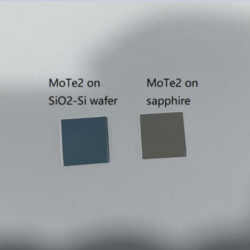
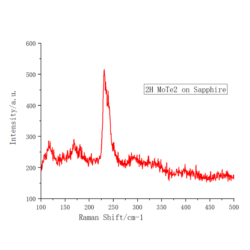
Molybdenum Ditelluride (MoTe₂)
£429.99 -

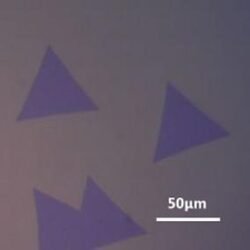
Molybdenum Disulfide (MoS₂)
Original price was: £419.99.£377.99Current price is: £377.99. Hot10% off -
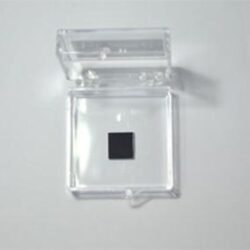
Antimony Telluride (Sb₂Te₃)
£429.99 -
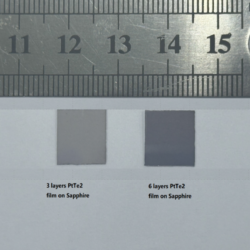
Platinum Ditelluride (PtTe₂)
£429.99 -
-
-
Tungsten Diselenide (WSe₂)
£429.99 -

Bismuth Oxyselenide (Bi₂O₂Se)
£429.99 -
-
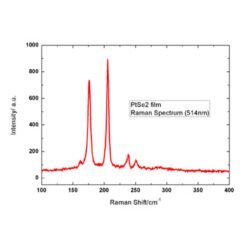
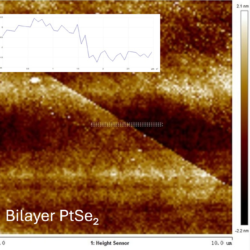
Platinum Diselenide (PtSe₂)
£429.99