
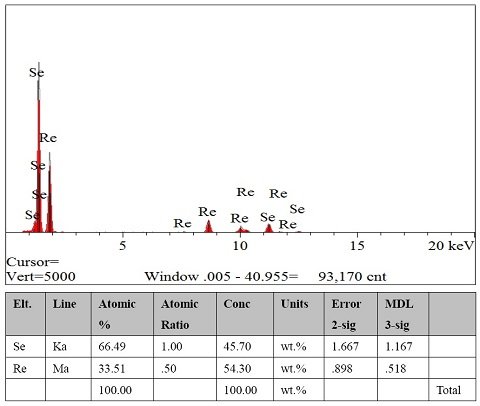
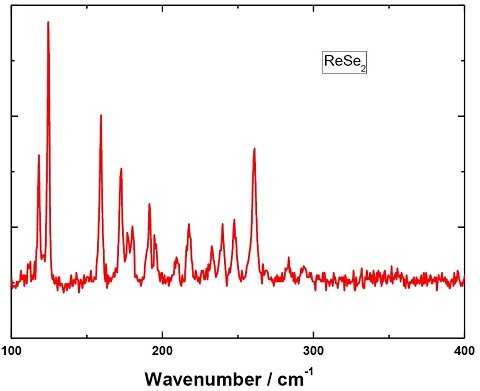
ReSe₂ Crystals
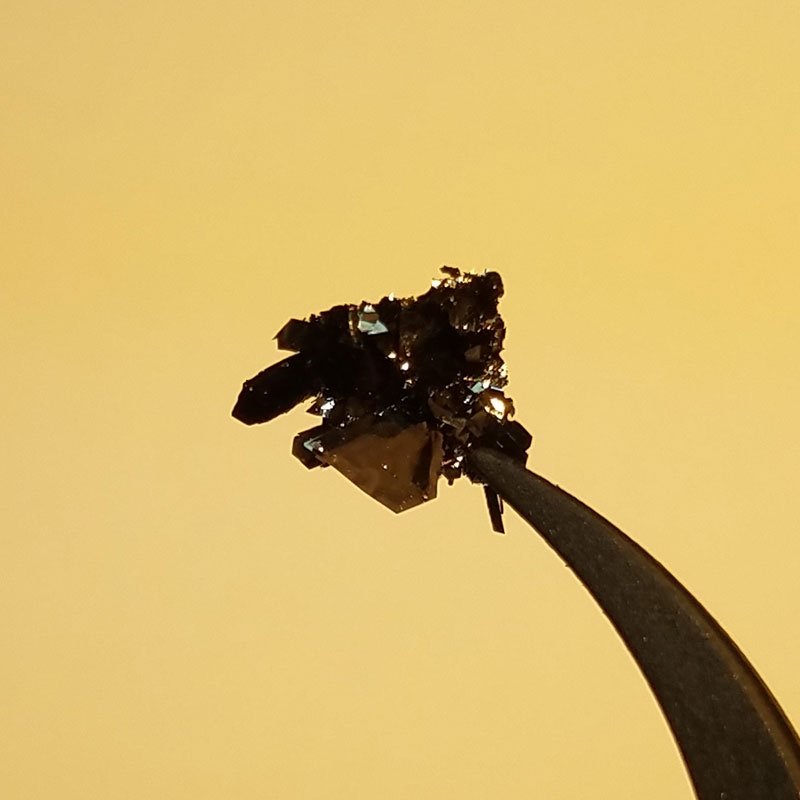
ReSe₂ (Rhenium Diselenide) is a layered transition metal dichalcogenide (TMD) with a distorted 1T structure, exhibiting in-plane anisotropy, strong spin-orbit coupling, and layer-dependent optical and electronic properties. Unlike conventional TMDs with hexagonal symmetry, ReSe₂ features a triclinic crystal structure, leading to highly anisotropic transport and optical responses. It is an ideal material for applications in optoelectronics, anisotropic electronics, nonlinear optics, and 2D material research. Our ReSe₂ crystals are synthesized using the Chemical Vapor Transport (CVT) method, ensuring high purity, excellent crystallinity, and precise stoichiometry.
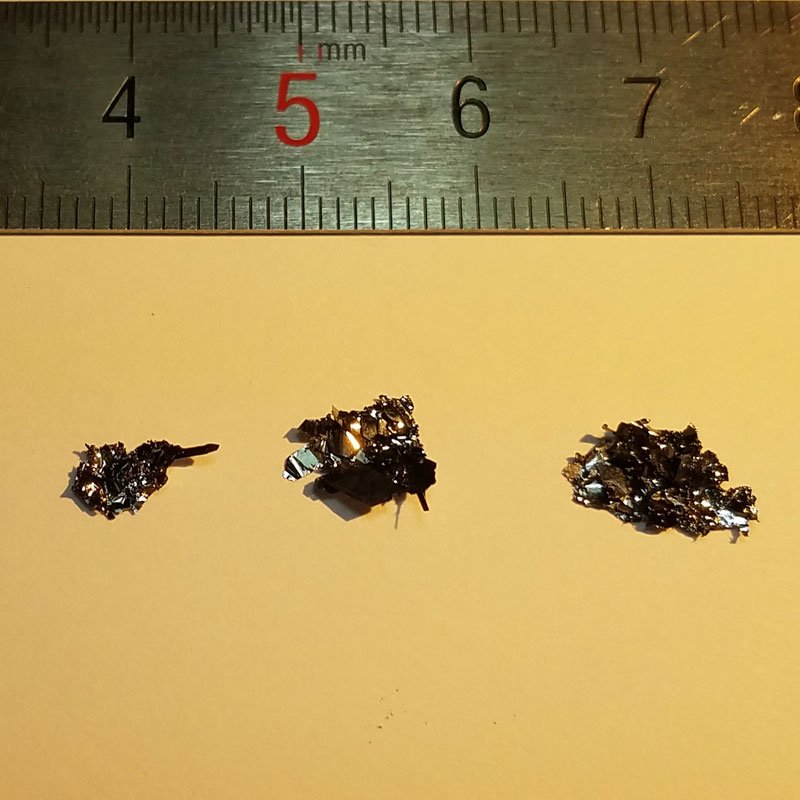
Sample Size Options:
Crystals larger than 10 mm²
Crystals larger than 25 mm²
Crystals larger than 100 mm²
Material Properties:
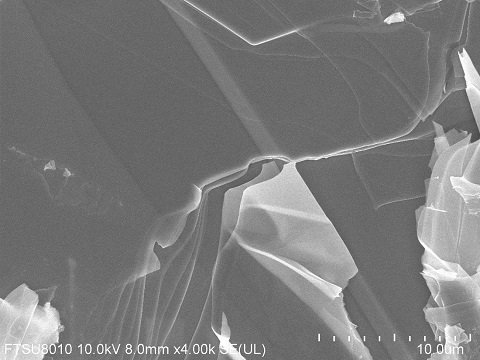
Layered van der Waals Structure: Enables facile exfoliation into monolayers or few-layer nanosheets for 2D material studies. Triclinic
Crystal Structure: Exhibits in-plane anisotropy in electrical, optical, and vibrational properties.
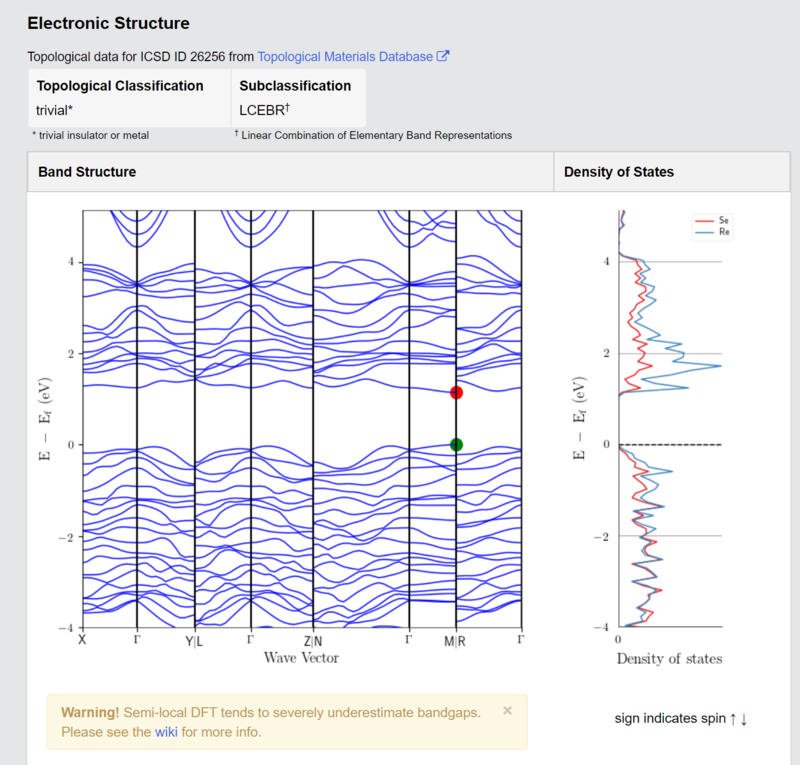
Indirect Bandgap Semiconductor: Bulk ReSe₂ has an indirect bandgap of ~1.2 eV, which shifts to a direct bandgap of ~1.35 eV in monolayer form, suitable for optoelectronic applications.
Strong Spin-Orbit Coupling: Enhances valleytronic and spintronic applications. Linear Dichroism and Anisotropic Optical Absorption: Enables polarization-dependent photodetector applications.
High Chemical Stability: More stable than Mo- and W-based TMDs under ambient conditions.
Crystal Structure:
Type: Triclinic (distorted 1T phase) layered structure
Features: High crystallinity with uniform, defect-free layers, suitable for thin-film fabrication and nanoscale device integration.
Degree of Exfoliation:
Ease of Use: Easily exfoliated into monolayers or few-layer nanosheets for advanced materials research and heterostructure fabrication.
Other Characteristics:
Anisotropic Electrical & Optical Properties: Exhibits strong direction-dependent charge transport and absorption.
Excellent Environmental Stability: Maintains structural integrity under ambient conditions, making it more robust than MoSe₂ or WSe₂. Potential for Quantum Materials Research: Useful for studying spin-orbit interactions and novel valleytronic effects.
Applications:
Optoelectronics & Photodetectors:
Ideal for anisotropic photodetectors and polarization-sensitive light sensors. Nanoelectronics:
High-performance material for anisotropic transistors and flexible electronics. Spintronics & Quantum Computing:
Enables research on spin-orbit coupling, valley polarization, and topological quantum effects.
2D Material Studies:
Perfect for exfoliation into monolayers and integration into van der Waals heterostructures. Nonlinear Optics & Polarization Devices:
Strong second-harmonic generation (SHG) and anisotropic optical response make it suitable for frequency conversion applications. Synthesis Method:
Chemical Vapor Transport (CVT): Ensures high-quality crystals with excellent purity, uniform thickness, and high structural integrity.
| Option 1 | > 10 mm², > 100 mm², > 25 mm² |
|---|
Related products
-
RuCl₃ Crystals
Price range: £499.99 through £899.99 -
Co-Doped Bi₂Se₃ Crystals
£499.99 -
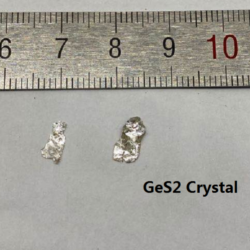
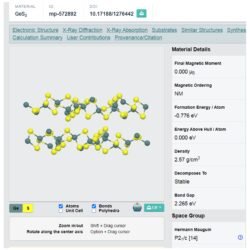
GeS₂ Crystals
Price range: £499.99 through £599.99 -
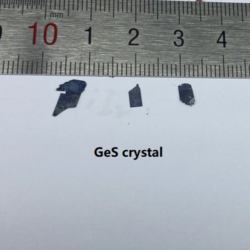
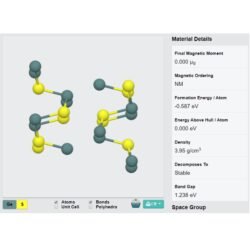
GeS Crystals
Price range: £499.99 through £549.99 -
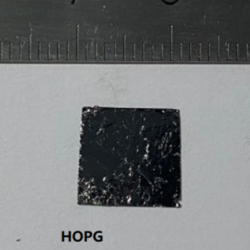
HOPG
£479.99 -
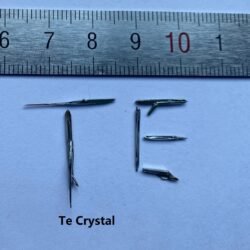
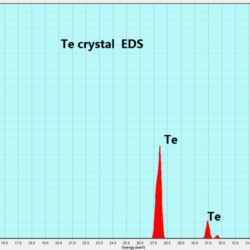
Te Crystals
£499.99 -
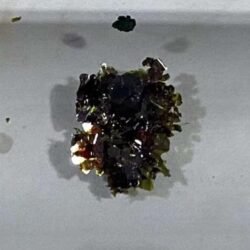
CrBr₃ Crystals
£499.99 -
Ni₂Bi₂Te₅ Crystals
Price range: £499.99 through £569.99 -

MoTe₂ Crystals (2H phase)
Price range: £499.99 through £569.99 -
FeCl₂ Crystals
Price range: £499.99 through £569.99