
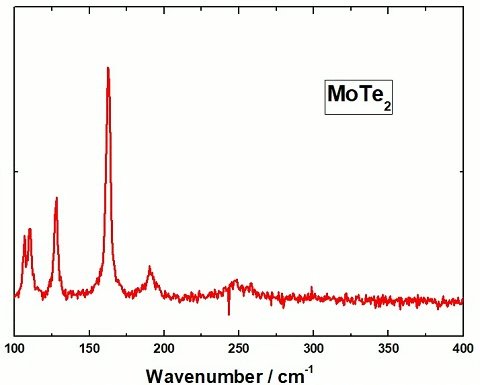
MoTe₂ Crystals
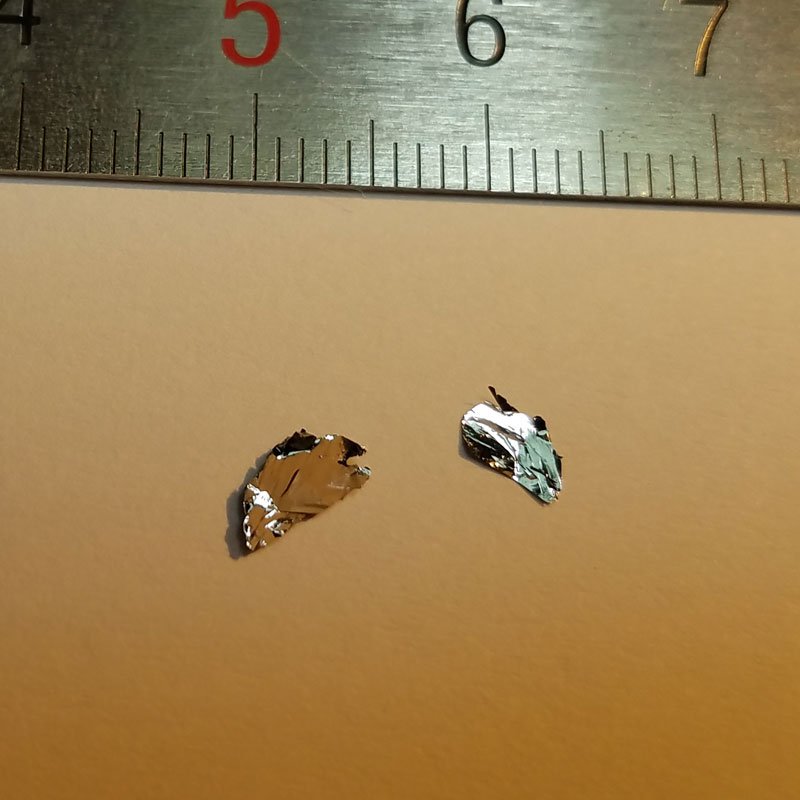
MoTe₂ is a layered transition metal dichalcogenide (TMDC) with a van der Waals structure, known for its semiconducting 2H phase. With a tunable bandgap and excellent electronic and optical properties, MoTe₂ is a promising material for optoelectronics, photonics, and 2D material research.
Sample Size Options:
Crystals larger than 10 mm²
Crystals larger than 25 mm²
Material Properties:
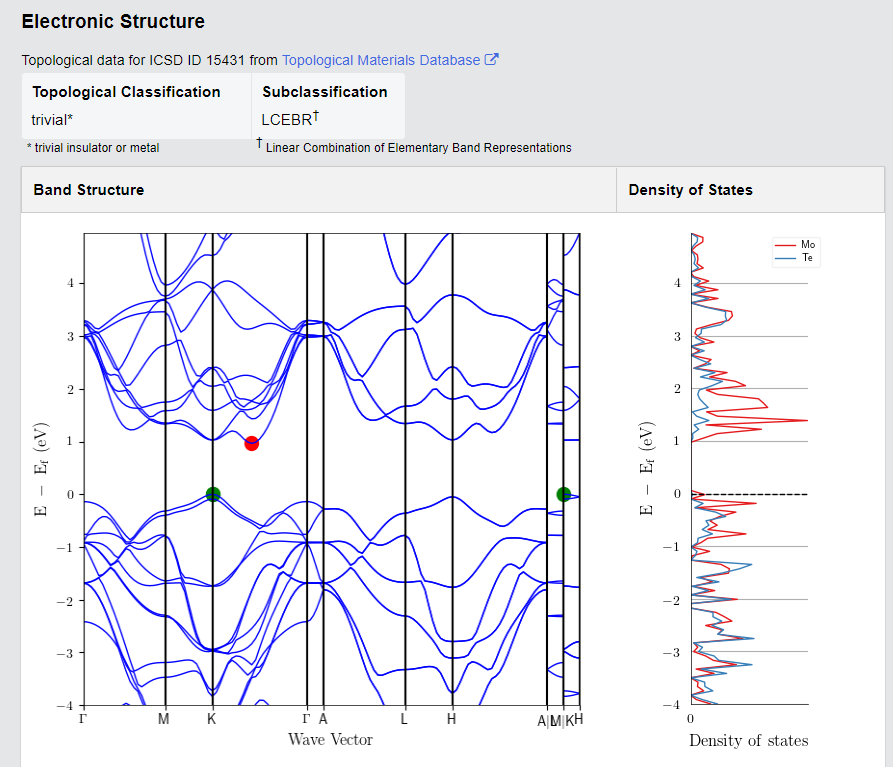
Layered van der Waals Structure: Ideal for exfoliation into thin layers. Semiconducting 2H Phase: Exhibits a direct bandgap (~1.1 eV for monolayers, indirect in bulk).
High Carrier Mobility: Suitable for advanced electronic applications.
Thermal Stability: Maintains structural and electronic properties under controlled conditions.
Crystal Structure:
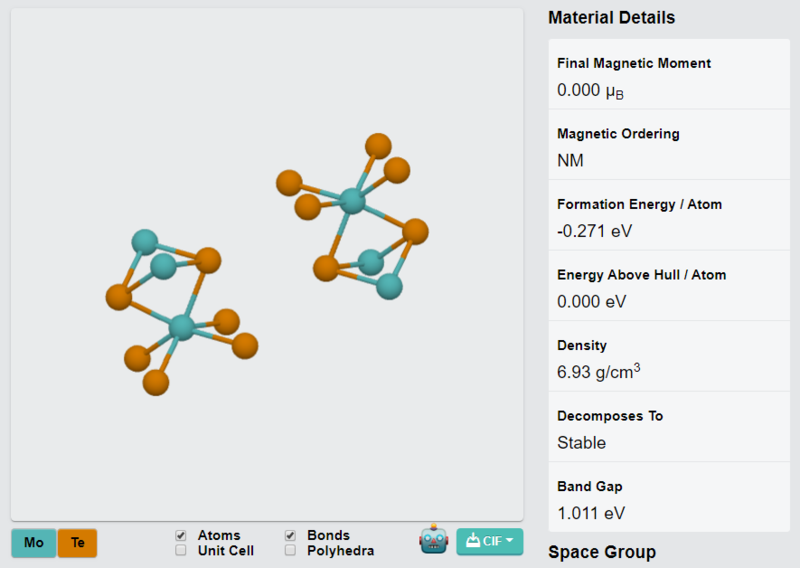
Type: Hexagonal (2H phase)
Features: Cleavable layers for 2D research and device fabrication.
Degree of Exfoliation:
Ease of Use: Easily exfoliated into monolayers or few-layer sheets for advanced 2D applications.
Other Characteristics:
Tunable Bandgap: Transition from indirect (bulk) to direct (monolayer) bandgap, ideal for optoelectronics.
Optical Properties: High quantum efficiency and strong light absorption in the near-infrared range.
Chemical Stability: Stable under inert storage conditions for long-term use.
Applications:
Optoelectronics:
Ideal for photodetectors, light-emitting devices, and other optoelectronic applications.
2D Material Studies:
Suitable for exfoliation into monolayers and exploring heterostructures in van der Waals systems. Quantum Materials Research:
Enables studies of low-dimensional electronic and optical properties. Energy
Applications:
Promising material for photocatalysis, hydrogen evolution reactions (HER), and solar energy conversion.
References:
1, Qu, Deshun, et al. “Carrier‐type modulation and mobility improvement of thin MoTe₂.” Advanced Materials 29.39 (2017): 1606433.
2, Song, Seunghyun, et al. “Room temperature semiconductor-metal transition of MoTe₂ thin films engineered by strain.” Nano letters 16.1 (2016): 188-193.
3, Zhang, Kenan, et al. “Interlayer transition and infrared photodetection in atomically thin type-II MoTe₂/MoS₂ van der Waals heterostructures.” ACS nano 10.3 (2016): 3852-3858.
4, Octon, Tobias J., et al. “Fast High‐Responsivity Few‐Layer MoTe₂ Photodetectors.” Advanced Optical Materials 4.11 (2016): 1750-1754.
| Option 1 | > 10 mm², > 25 mm² |
|---|
Related products
-
NiI₃ Crystals
Price range: £499.99 through £899.99 -
FeCl₂ Crystals
Price range: £499.99 through £569.99 -
FeCl₃ Crystals
Price range: £499.99 through £899.99 -
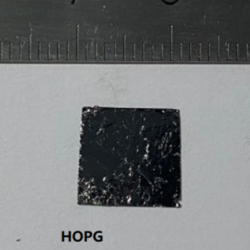
HOPG
£479.99 -
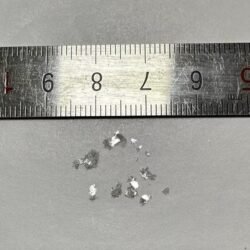

BiOCl Crystals
Price range: £499.99 through £569.99 -
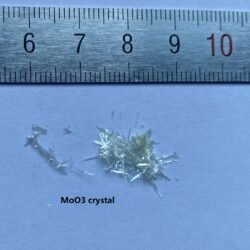
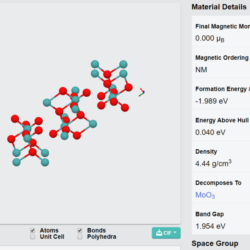
α-MoO₃ Crystals
Price range: £459.99 through £499.99 -
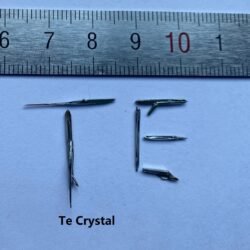
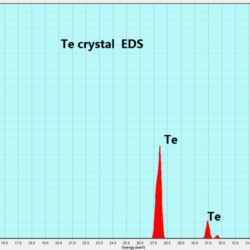
Te Crystals
£499.99 -
TiS₃ Crystals
Price range: £469.99 through £899.99 -
GaS Crystals
Price range: £499.99 through £569.99 -
GeSe₂ Crystals
Price range: £499.99 through £569.99