
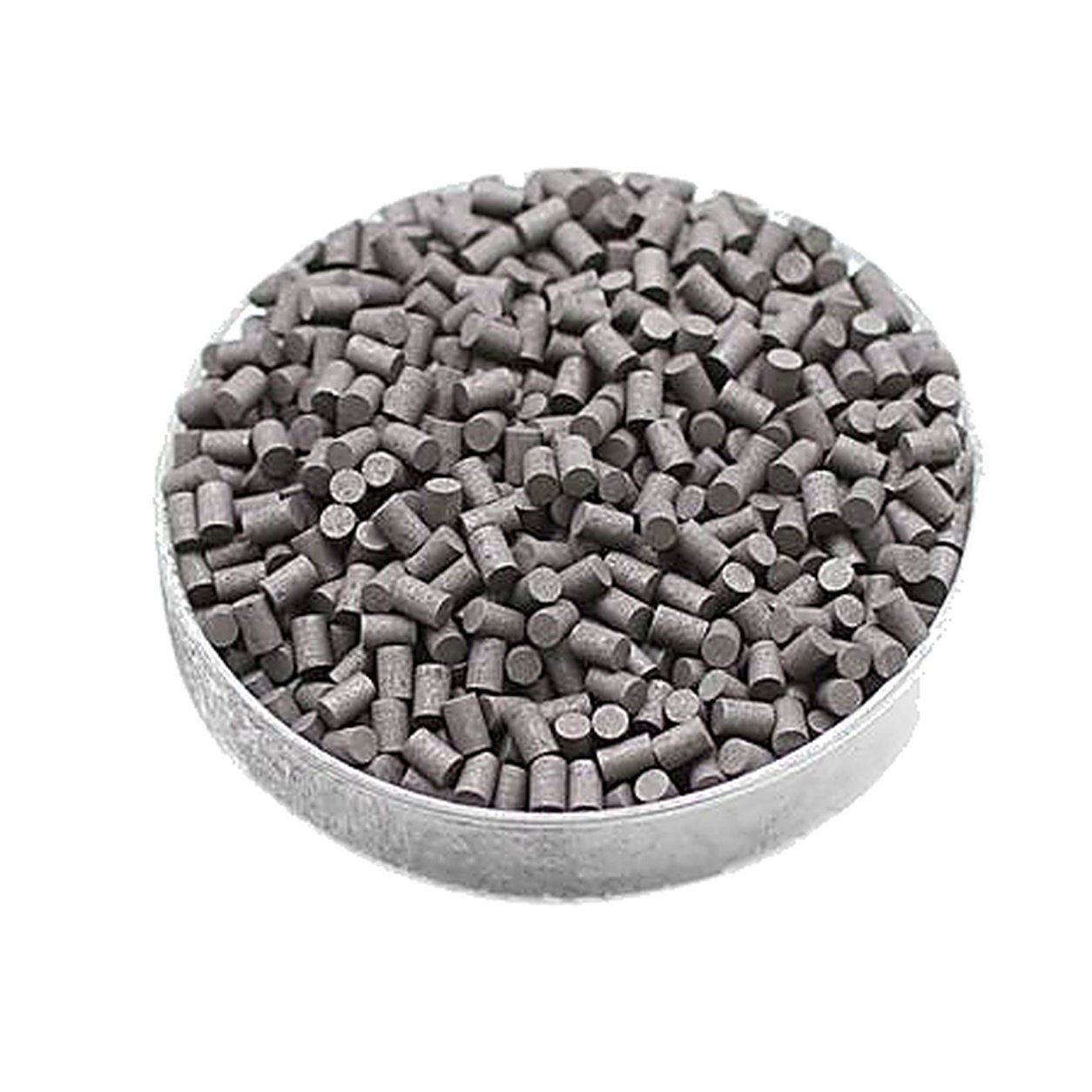
Graphite (C) Granules, 99.999% Purity
Price range: £422.99 through £554.99
Dispatch normally within 1 business day; carrier transit normally 6–8 business days (7–9 business days in total). See Shipping Policy and Returns Policy.
Graphite (C) Granules, 99.999% Purity
Nanostore Graphite (C) granules are evaporation source materials supplied for thin-film deposition research, PVD source loading, compound precursor studies, and laboratory materials development. The pellet and piece formats are convenient for weighing, loading, and small-batch experimental workflows where material identity, purity selection, and clean handling are important.
Key Features
Elemental Source Material
Available purity options include 99.999% (5N) for research workflows that require controlled metal composition.
Pellet and Piece Formats
Available particle or piece sizes include 0.039 in-0.394 in (1-10 mm) granules/pieces. Package options include 1 kg, 100 g, 500 g depending on selected purity and size.
Clean Handling and Storage
Store sealed in a dry environment. Handle with clean gloves or tweezers and avoid contact with oils, dust, moisture, or other contaminants before use.
Technical Specifications
Material: Graphite (C)
Form: Granules
Purity Options: 99.999% (5N)
Available Size Options: 0.039 in-0.394 in (1-10 mm) granules/pieces
Package Options: 1 kg, 100 g, 500 g
Category: Evaporation Materials
Typical Use: Evaporation source material, PVD research, alloy preparation, and laboratory materials science
Material Properties and Technical Indicators
The following material-property values are provided as reference technical indicators for material selection, source loading, process planning, and thin-film deposition evaluation:
– Element symbol: C
– CAS number: 7782-42-5
– Physical state: solid
– Sublimation point: 3642 °C
– Triple point: 4327 °C
– Crystal structure: hexagonal
– Magnetic order: diamagnetic
Quality-Control and Handling Indicators
– Analytical checks: ICP-MS trace-element analysis; ICP impurity/composition analysis; GDMS trace-metal analysis; carbon/sulfur impurity analysis; nitrogen/oxygen impurity analysis; chemical composition analysis.
– Inspection focus: particle-size screening; appearance inspection; dimensional verification.
– Handling and storage: sealed dry storage and protective packaging; clean-glove handling to avoid oil, dust, moisture, and surface contamination; careful handling to avoid compression, impact, or chipping.
– Deposition-use context: magnetron sputtering systems; ion sputtering systems; micro/nano fabrication research; semiconductor thin-film development; photovoltaic materials research; flat-panel display coating research.
Common Applications
– graphite evaporation source loading
– carbon film and coating research
– laboratory PVD source preparation
– materials science and carbon studies
– Academic, industrial, and pilot-scale materials research
Graphite consists of carbon atoms arranged in bonded sheets, with weaker interactions between neighbouring layers. Strong bonding within each sheet and weaker interactions between sheets give graphite direction-dependent electrical and thermal properties. The layered structure also allows neighbouring sheets to slide relative to one another.
Raman spectroscopy and XPS are commonly used in graphite characterisation to investigate carbon structure and surface composition. Optical microscopy and AFM are commonly used in surface studies to examine morphology and topography.
Specifications
| Material | Graphite (C) |
|---|---|
| Element symbol | C |
| Purity | 99.999% |
| CAS number | 7782-42-5 |
| Physical state | solid |
| Crystal structure | hexagonal |
| Magnetic order | diamagnetic |
| Sublimation point | 3642 °C |
| Triple point | 4327 °C |
| Option 1 | 99.999% (5N) |
|---|---|
| Option 2 | 0.039 in-0.394 in (1-10 mm) granules/pieces |
| Option 3 | 1 kg, 100 g, 500 g |
Related products
-
-
Nickel Oxide (NiO) Evaporation Pellets, 99.9% Purity
SKU: NIO-PEL-3NPrice range: £154.99 through £238.99 -
-
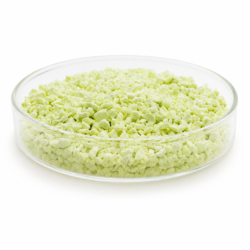
Tungsten Trioxide (WO₃) Evaporation Pellets, 99.99% Purity (Request Current Price)
SKU: WO3-PEL-4NPrice upon request