
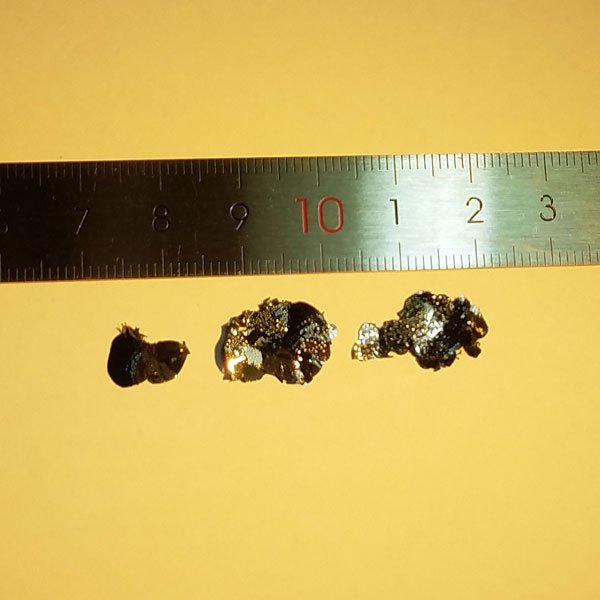

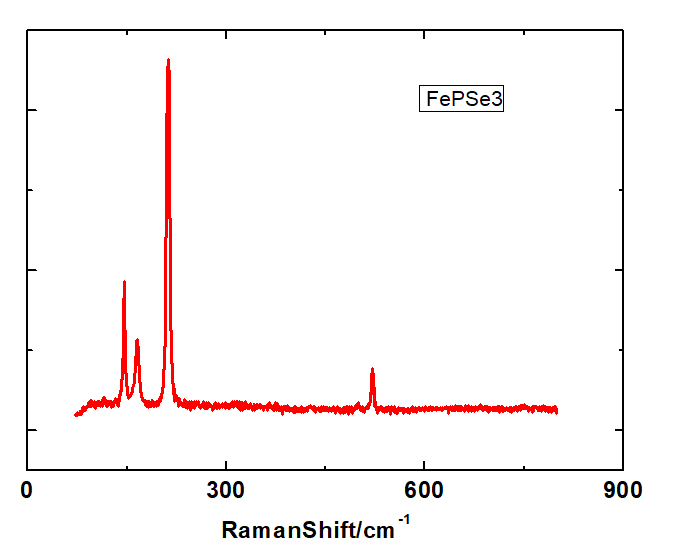
FePSe₃ Crystals
FePSe₃ is a layered antiferromagnetic semiconductor with a van der Waals structure, exhibiting strong in-plane magnetic anisotropy and excellent electronic properties. It belongs to the MPX3 family (M = transition metal, X = chalcogen), known for tunable magnetic behavior and semiconducting characteristics. This material is ideal for applications in spintronics, quantum materials research, and 2D magnetism studies. Our FePSe₃ crystals are synthesized using the Chemical Vapor Transport (CVT) method, ensuring high purity, precise stoichiometry, and high crystallinity.
Sample Size Options:
Crystals larger than 10 mm²
Crystals larger than 25 mm²
Crystals larger than 100 mm²
Material Properties:
Layered van der Waals Structure: Facilitates easy exfoliation into monolayers or few-layer sheets for 2D material studies.
Antiferromagnetic Ordering: Exhibits Néel-type antiferromagnetic behavior with strong magnetic anisotropy below ~110 K.
Semiconducting Properties: Moderate bandgap (~1.3-1.5 eV), suitable for optoelectronic and electronic applications.
Magnetic Anisotropy: Strong in-plane magnetic interactions, enabling advanced spintronic applications.
Crystal Structure:
Type: Monoclinic layered structure
Features: Cleavable layers, ideal for thin-film fabrication and nanoscale device research.
Degree of Exfoliation:
Ease of Use: Readily exfoliated into thin layers for advanced materials research and device applications.
Other Characteristics:
Quantum Magnetism: Enables exploration of 2D antiferromagnetism, spin-lattice interactions, and quantum spin phenomena.
Spintronic Potential: Promising for spin-based memory devices, magnetic sensors, and data storage technologies.
Environmental Stability: Maintains structural and magnetic properties under ambient conditions.
Applications:
Quantum Materials Research:
Ideal for studying 2D magnetism, quantum spin dynamics, and low-dimensional magnetic systems. Spintronics:
Suitable for magnetic memory devices, spin valves, and spin-based logic circuits.
2D Material Studies:
Perfect for exfoliation into monolayers and integration into van der Waals heterostructures. Optoelectronics:
Promising for photodetectors, light-emitting devices, and optical modulators. Energy
Applications:
Potential for catalytic applications, energy storage, and next-generation battery technologies. Synthesis Method:
Chemical Vapor Transport (CVT): Ensures high-quality crystals with excellent purity, uniformity, and structural integrity.
| Option 1 | > 10 mm², > 100 mm², > 25 mm² |
|---|
Related products
-
WSSe Crystals
Price range: £599.99 through £899.99 -
Co-Doped Bi₂Se₃ Crystals
£499.99 -

BiI₃ Crystals
Price range: £499.99 through £899.99 -
CrBr₃ Crystals
£499.99 -
InBiSe₃ Crystals
Price range: £499.99 through £899.99 -
FeCl₃ Crystals
Price range: £499.99 through £899.99 -
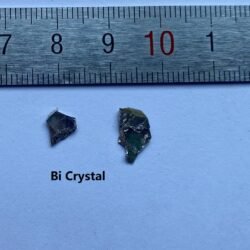
Bi Crystals
£499.99 -
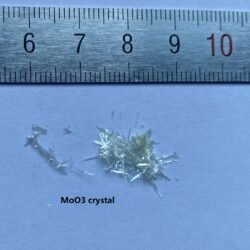
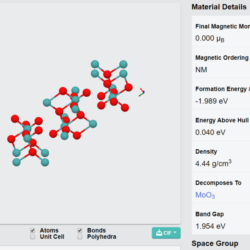
α-MoO₃ Crystals
Price range: £459.99 through £499.99 -
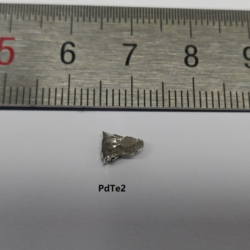
PdTe₂ Crystals
£499.99 -
NiI₃ Crystals
Price range: £499.99 through £899.99