
Molybdenum Ditelluride (MoTe₂)
CAS Number: 12058-20-7
Substrate Size: 1 cm x 1 cm
Preparation Method: Chemical Vapor Deposition (CVD)
Morphology Options:
Few Layers (~5 layers)
Multiple Layers (~10 layers) Phase Options:
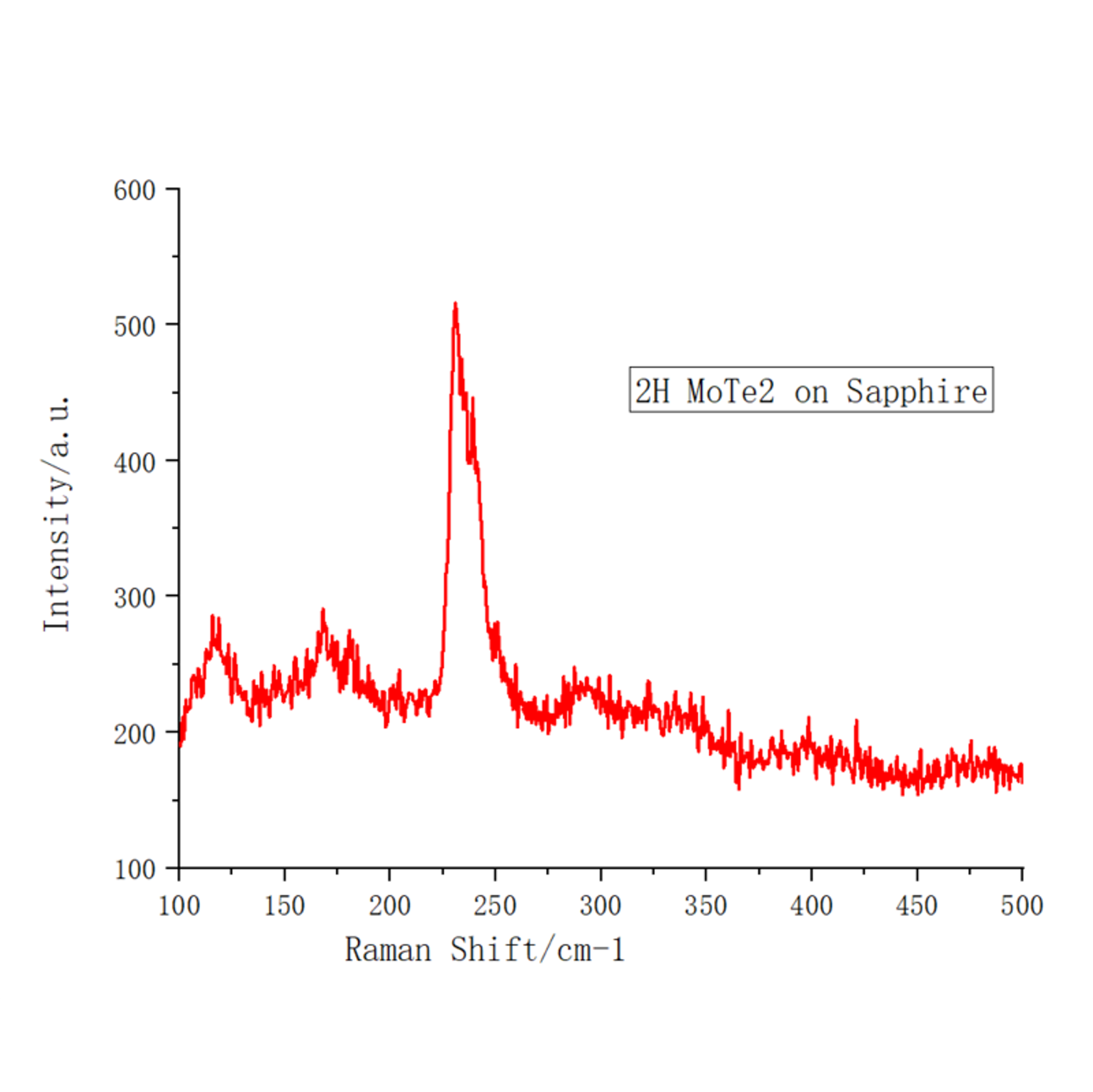
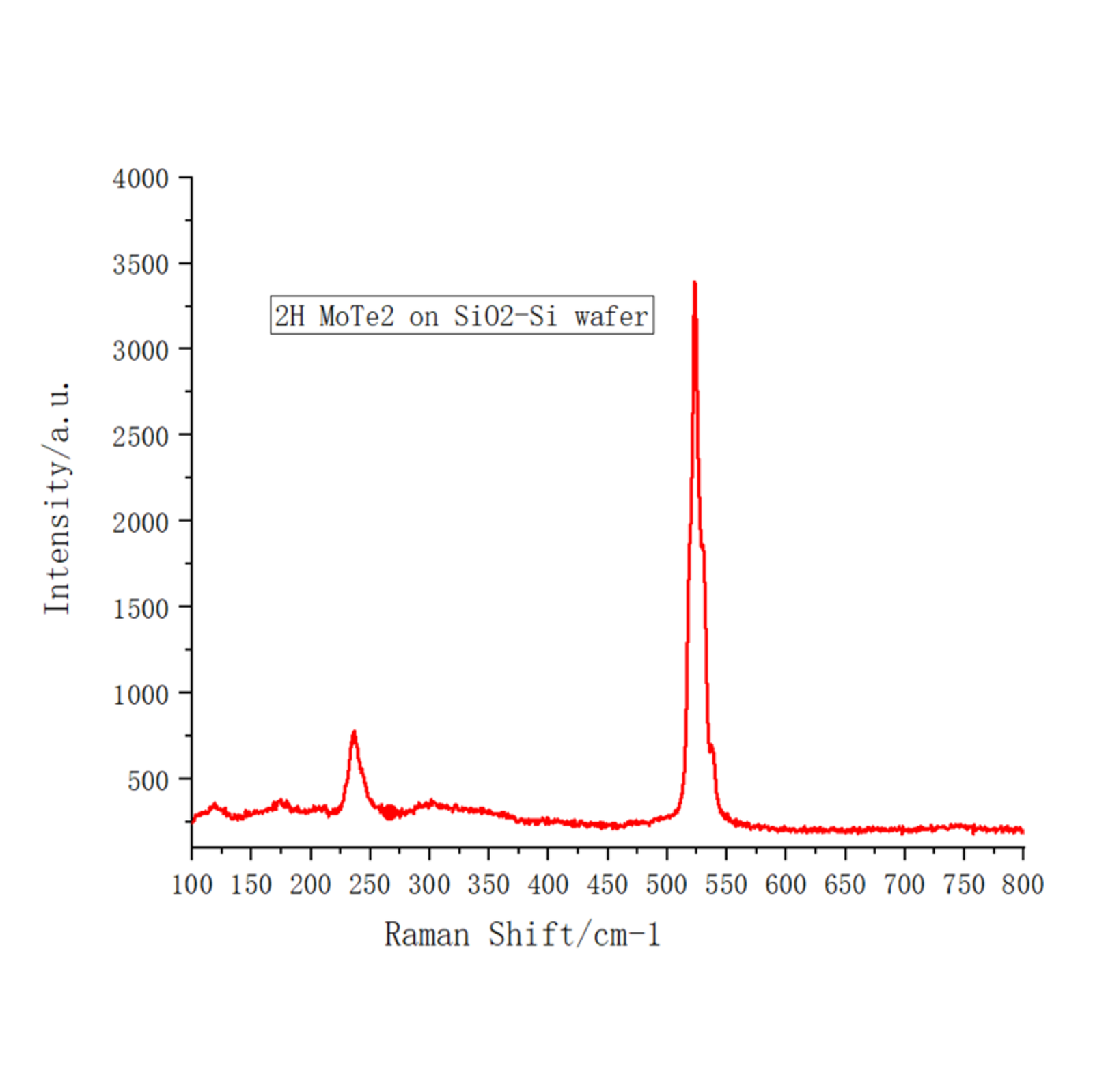
2H
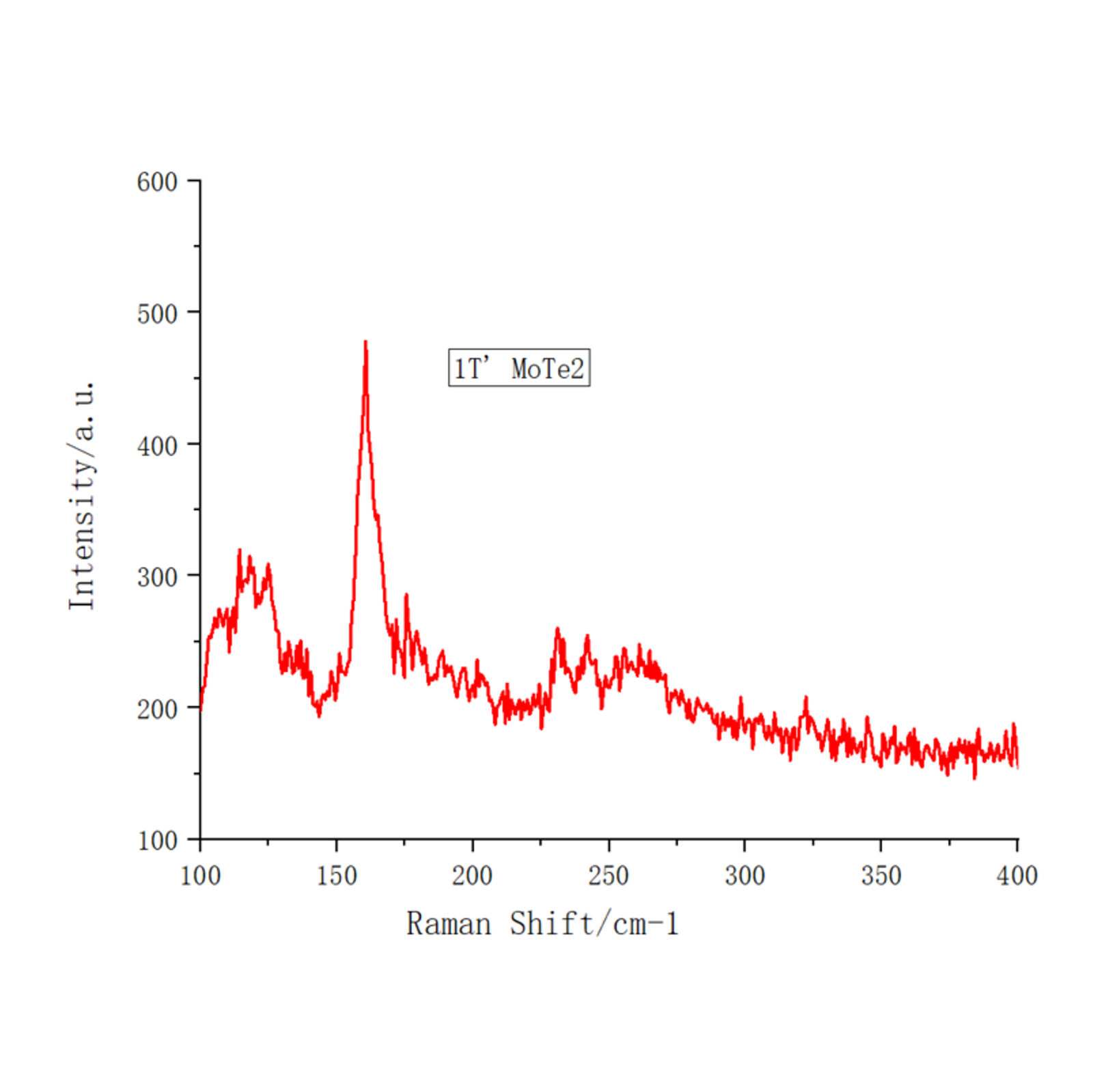
1T’
Substrate Options:
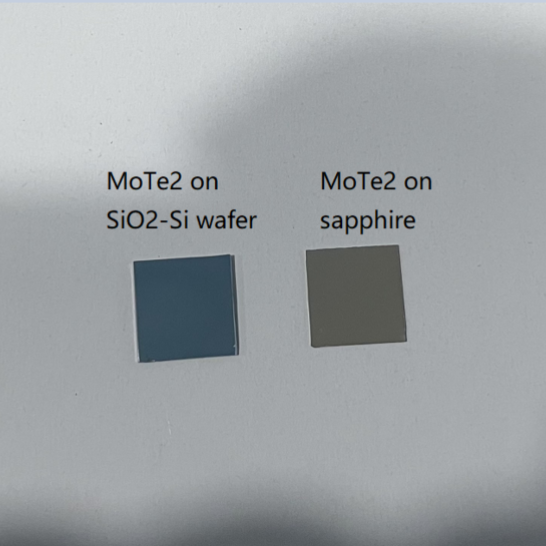
MoTe₂ films can be directly grown on SiO₂ or sapphire substrates. Custom transfer to other substrates is available upon request-please visit our Custom Products page or contact us for assistance.
Fundamental Properties:
Molybdenum ditelluride (MoTe₂) is a layered transition metal dichalcogenide (TMD) with polymorphic phases, including semiconducting 2H and metallic 1T’ structures. In its monolayer form, 2H-MoTe₂ has a direct bandgap of approximately 1.1 eV, making it suitable for optoelectronic applications. The 1T’ phase, on the other hand, exhibits metallic properties and potential for topological applications. MoTe₂ is known for its environmental stability, tunable phase transitions, and high carrier mobility, making it a versatile material for a wide range of electronic, optoelectronic, and sensing applications. Its catalytic activity and unique structural properties also make it suitable for energy storage and conversion technologies.
Applications:
Optoelectronics: The direct bandgap of 2H-MoTe₂ enables its use in photodetectors, solar cells, and other light-harvesting devices.
Electronics: MoTe₂ is a promising channel material for field-effect transistors (FETs) due to its high mobility and tunable electronic properties. Energy Applications: MoTe₂ demonstrates catalytic activity for hydrogen evolution reactions (HER) and can be utilized in batteries and supercapacitors.
Sensors: MoTe₂-based sensors offer high sensitivity and stability for gas and chemical detection.
Quantum Technologies: The 1T’ phase of MoTe₂ supports exploration in topological quantum materials and spintronics.
| Option 1 | Few Layers (~5 layers), Multiple Layers (~10 layers) |
|---|---|
| Option 2 | Sapphire (Double-Side Polished), Sapphire (Single-Side Polished), SiO₂/Si (300 nm SiO₂ Layer) |
| Option 3 | 1T', 2H |
Related products
-
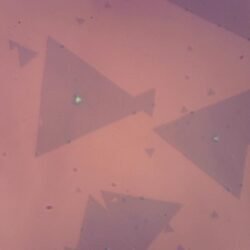

Molybdenum Diselenide (MoSe₂)
£429.99 -


-
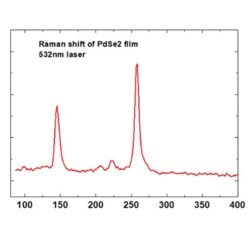
Palladium Diselenide (PdSe₂)
£429.99 -
Tin Diselenide (SnSe₂)
£429.99 -

-
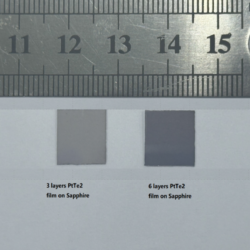
Platinum Ditelluride (PtTe₂)
£429.99 -

-
Nickel Ditelluride (NiTe₂)
£429.99 -
Rhenium Disulfide (ReS₂)
£429.99 -