
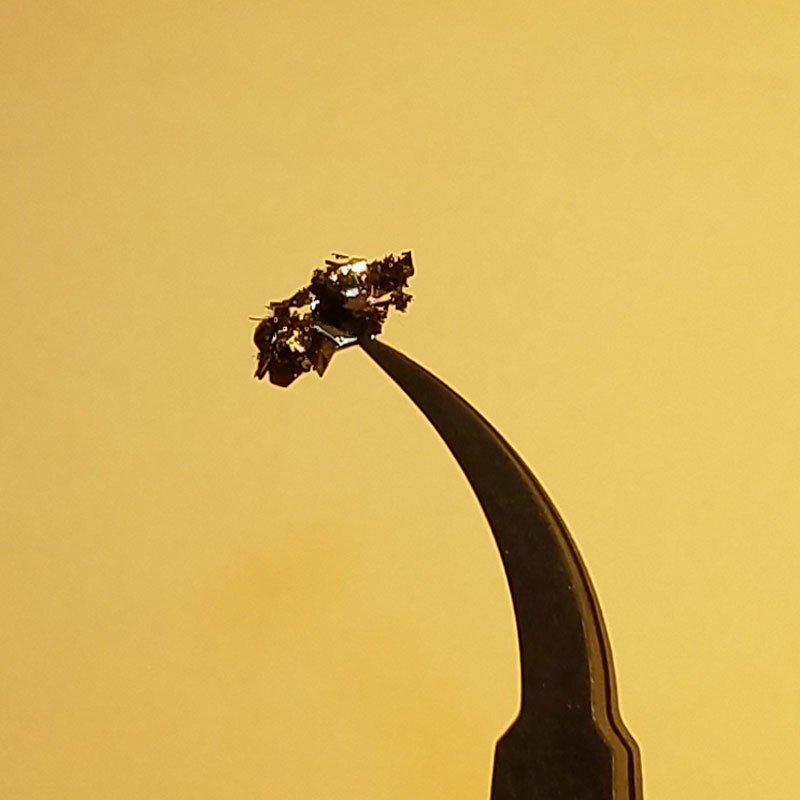
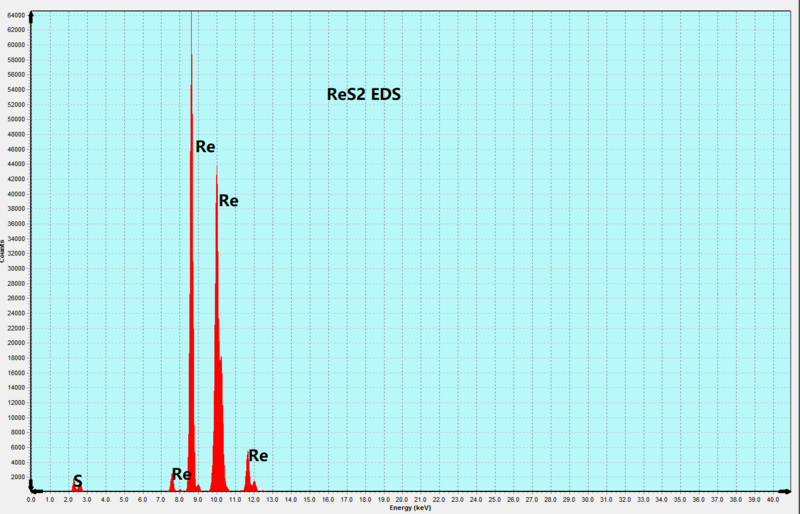
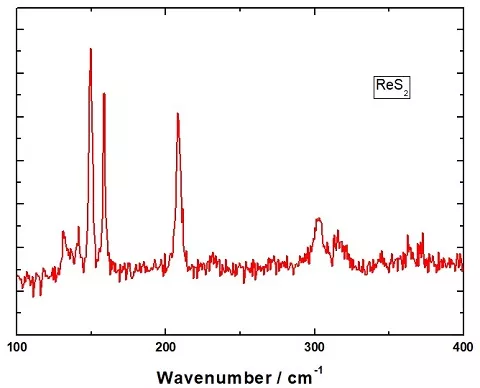
ReS₂ Crystals
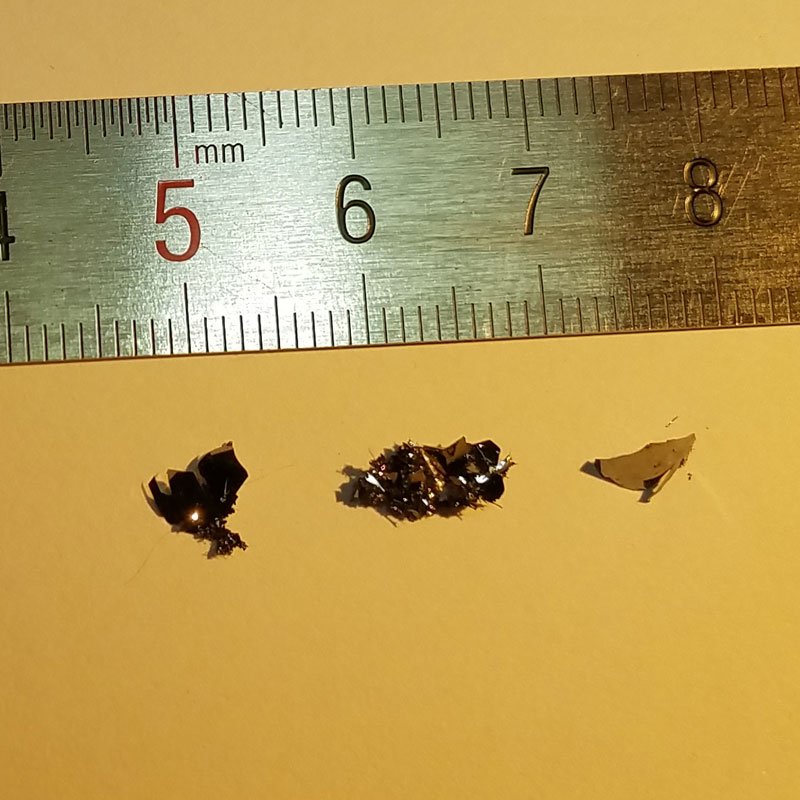
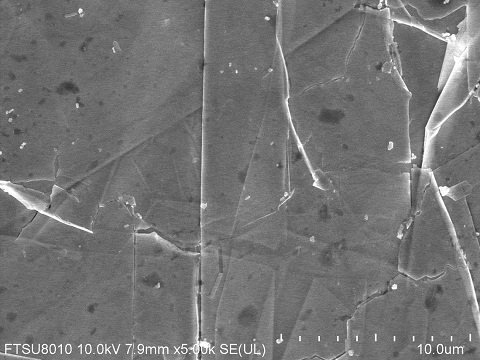
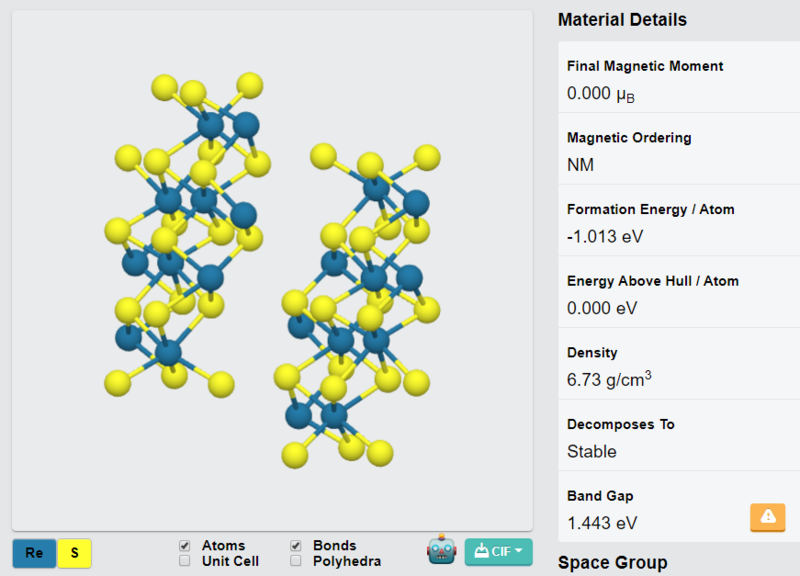
ReS₂ (Rhenium Disulfide) is a layered transition metal dichalcogenide (TMD) with a unique distorted 1T phase structure, exhibiting in-plane anisotropy, strong spin-orbit coupling, and highly variable electronic and optical properties. Unlike conventional TMDs with hexagonal symmetry, ReS₂ features a triclinic crystal structure that results in highly anisotropic transport and optical responses. It is an the material for applications in optoelectronics, anisotropic electronics, nonlinear optics, and 2D material research. Our ReS₂ crystals are synthesized using the Chemical Vapor Transport (CVT) method, with high purity, high crystallinity, and precise stoichiometry.
Sample Size Options:
Crystals larger than 10 mm²
Crystals larger than 25 mm²
Crystals larger than 100 mm²
Material Properties:
Layered van der Waals Structure: Permits facile exfoliation into monolayers or few-layer nanosheets for 2D material studies. Triclinic
Crystal Structure: Exhibits in-plane anisotropy in electrical, optical, and vibrational properties.
Indirect Bandgap Semiconductor: Bulk ReS₂ has an indirect bandgap of ~1.4 eV, which shifts to a direct bandgap of ~1.5 eV in monolayer form, applicable to optoelectronic applications.
Strong Spin-Orbit Coupling: Enhances valleytronic and spintronic applications. Linear Dichroism and Anisotropic Optical Absorption: Permits polarization-dependent photodetector applications.
High Chemical behavior: Consistent under Mo- and W-based TMDs under ambient conditions.
Crystal Structure:
Type: Triclinic (distorted 1T phase) layered structure
Features: High crystallinity with uniform, defect-free layers, applicable to thin-film fabrication and nanoscale device assembly.
Degree of Exfoliation:
Ease of Use: Easily exfoliated into monolayers or few-layer nanosheets for specialized materials research and heterostructure fabrication.
Other Characteristics:
Anisotropic Electrical & Optical Properties: Exhibits strong direction-dependent charge transport and absorption.
Ambient-condition context for MoS₂ and WS₂. Potential for Quantum Materials Research: Relevant for studying spin-orbit interactions and specialized valleytronic effects.
Applications:
Optoelectronics & Photodetectors:
Applicable for anisotropic photodetectors and polarization-sensitive light sensors. Nanoelectronics:
Standard material for anisotropic transistors and flexible electronics. Spintronics & Quantum Computing:
Permits research on spin-orbit coupling, valley polarization, and topological quantum effects.
2D Material Studies:
Applicable for exfoliation into monolayers and assembly into van der Waals heterostructures. Nonlinear Optics & Polarization Devices:
Strong second-harmonic generation (SHG) and anisotropic optical response make it applicable to frequency conversion applications. Synthesis Method:
Chemical Vapor Transport (CVT): With quality crystals with purity, uniform thickness, and high structural integrity.
| Option 1 | > 10 mm², > 100 mm², > 25 mm² |
|---|
Related products
-
FeCl₃ Crystals
Price range: $696.09 through $1,252.98 -
HOPG
$668.25 -
GeSe₂ Crystals
Price range: $696.09 through $793.55 -
FeCl₂ Crystals
Price range: $696.09 through $793.55 -
FeBr₃ Crystals
Price range: $654.33 through $696.09 -
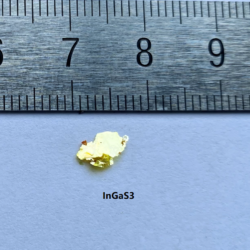
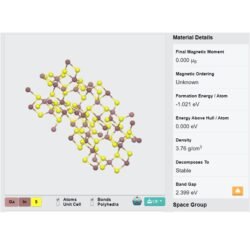
InGaS₃ Crystals
$696.09 -
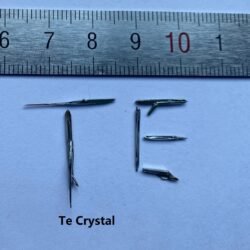
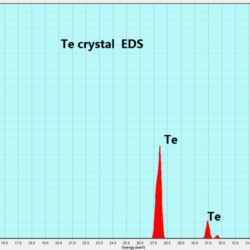
Te Crystals
$696.09 -
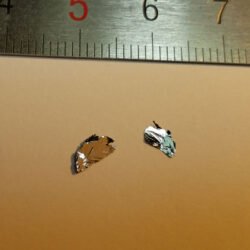
MoTe₂ Crystals (2H phase)
Price range: $696.09 through $793.55 -
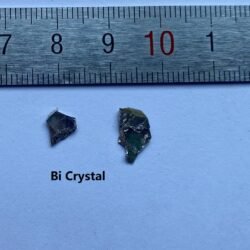
Bi Crystals
$696.09 -
BiI₃ Crystals
Price range: $696.09 through $1,252.98