
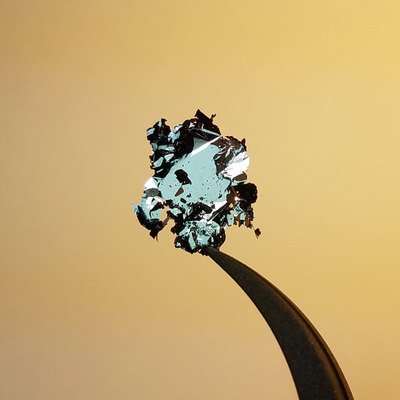
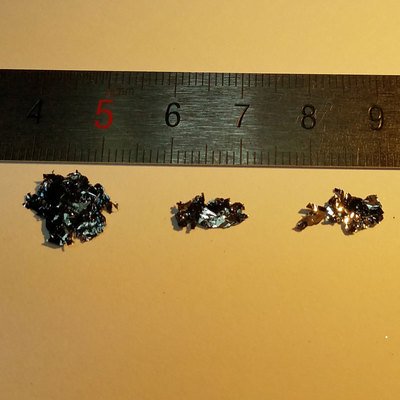
MoWS₄ Crystals
MoWS₄ is a layered transition metal chalcogenide alloy that combines the properties of both MoS₂ and WS₂. This mixed-metal sulfide exhibits variable electronic, optical, and catalytic properties, depending on the Mo:W ratio, supporting applications in nanoelectronics, optoelectronics, energy storage, and catalysis. MoWS₄ crystals are synthesized using the Chemical Vapor Transport (CVT) method.
Sample Size Options:
Crystals larger than 10 mm²
Crystals larger than 25 mm²
Material Properties:
Layered van der Waals Structure: Permits exfoliation into monolayers or few-layer sheets for 2D material research.
Variable Bandgap: Depending on the Mo:W ratio and layer thickness, the bandgap ranges between ~1.4 eV (bulk) and ~1.8-2.0 eV (monolayer), applicable to optoelectronic devices.
Carrier Mobility: Applicable for field-effect transistors (FETs) and high-speed nanoelectronic applications.
Catalytic Activity: Used in hydrogen evolution reactions (HER) involving Mo and W atoms.
Crystal Structure:
Type: Hexagonal layered structure (2H phase)
Features: Surfaces applicable for device fabrication and material characterization.
Degree of Exfoliation:
Ease of Use: Exfoliated into monolayers or few-layer nanosheets for materials research and heterostructure assembly.
Other Characteristics:
Optoelectronic Properties: Photoluminescence and light absorption across the visible spectrum. Spin-Orbit Coupling: Spintronic properties associated with the presence of tungsten atoms.
Anisotropic Transport: Direction-dependent electronic and optical properties for device designs.
Applications:
Optoelectronics:
Applicable for photodetectors, light-emitting diodes (LEDs), and photovoltaic devices due to light-matter interactions. Nanoelectronics:
Used for transistors, logic circuits, and flexible electronics. Catalysis:
Electrocatalyst for hydrogen evolution reactions (HER) and other energy-related catalytic applications.
2D Material Studies:
Applicable for exfoliation into monolayers and assembly into van der Waals heterostructures. Sensors:
Used for gas detection, chemical sensing, and biosensing applications. Synthesis Method:
Chemical Vapor Transport (CVT).
| Option 1 | > 10 mm², > 25 mm² |
|---|
Related products
-
FeBr₃ Crystals
Price range: $654.33 through $696.09 -
WSSe Crystals
Price range: $835.32 through $1,252.98 -
GaS Crystals
Price range: $696.09 through $793.55 -
Te Crystals
$696.09 -
FeCl₃ Crystals
Price range: $696.09 through $1,252.98 -
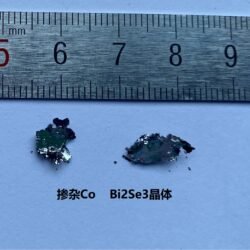
Co-Doped Bi₂Se₃ Crystals
$696.09 -
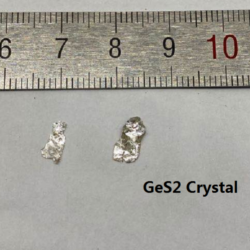
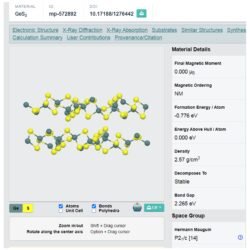
GeS₂ Crystals
Price range: $696.09 through $835.32 -
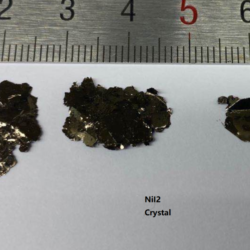
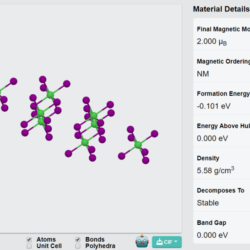
NiI₂ Crystals
Price range: $696.09 through $1,390.81 -
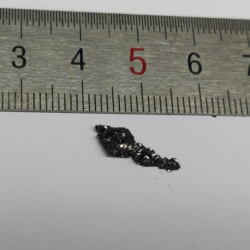
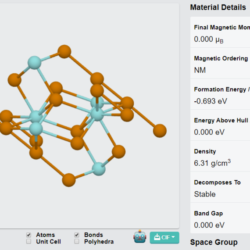
ZrTe₃ Crystals
Price range: $696.09 through $835.32 -
Ni₂Bi₂Te₅ Crystals
Price range: $696.09 through $793.55