
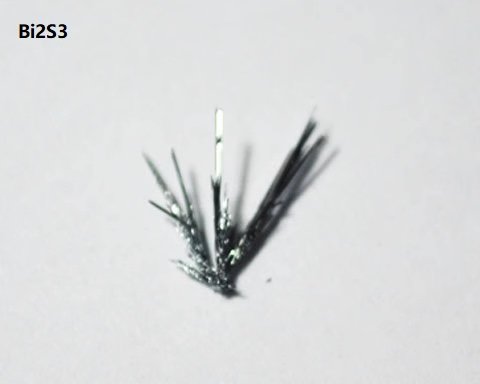
Bi₂S₃ Crystals
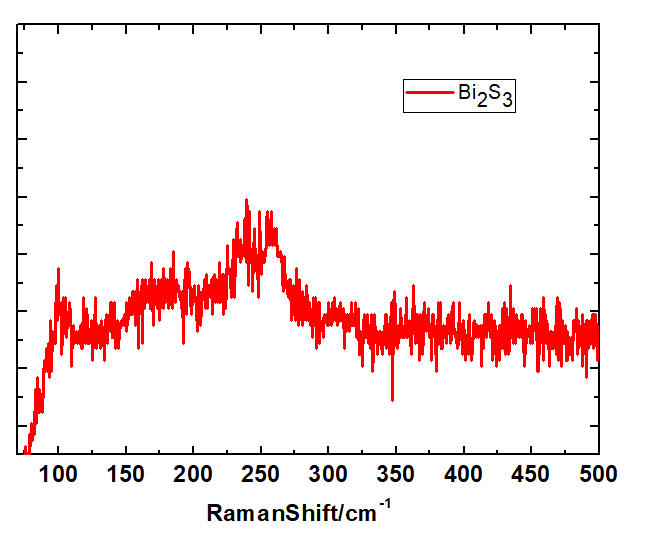
Bi₂S₃ (Bismuth Sulfide) is a layered semiconductor material with thermoelectric, optoelectronic, and photocatalytic properties. It has a narrow bandgap and absorption coefficient, supporting applications in photodetectors, thermoelectric devices, and solar energy conversion. Bi₂S₃ crystals are synthesized using the Chemical Vapor Transport (CVT) method.
Sample Size Options:
Crystals larger than 10 mm²
Crystals larger than 25 mm²
Crystals larger than 100 mm²
Material Properties:
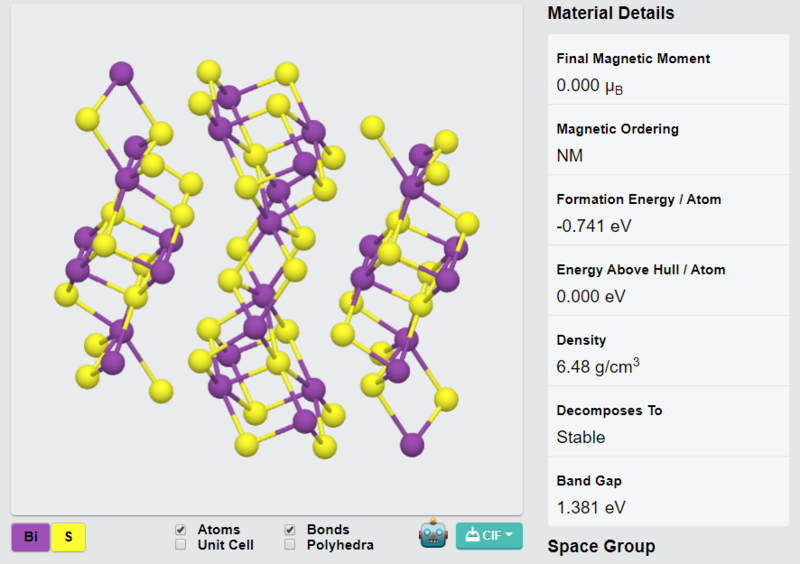
Layered Orthorhombic Structure: Facilitates exfoliation into thin layers for 2D material research.
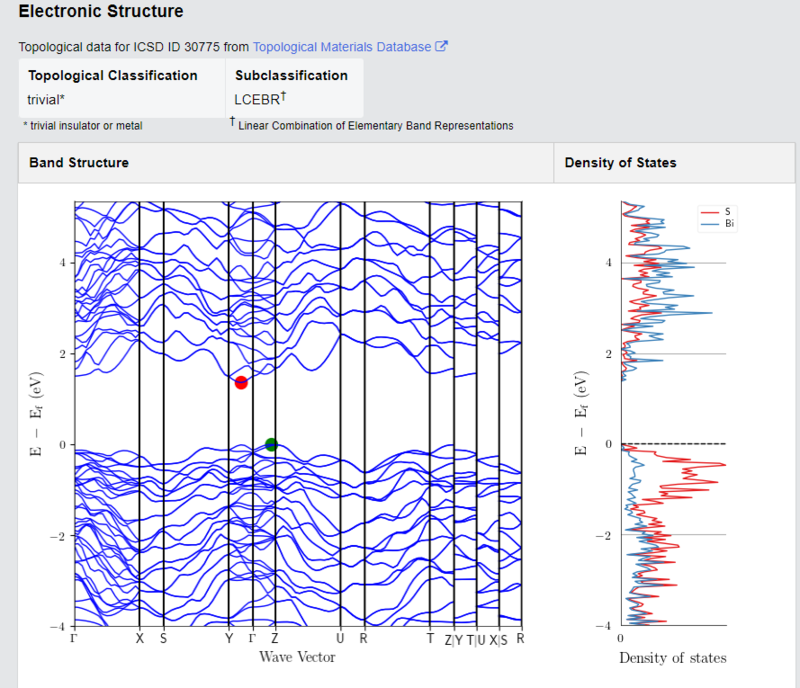
Narrow Bandgap: Bandgap of ~1.3 eV, applicable to infrared detectors and photovoltaic applications.
Absorption Coefficient: Light absorption in the visible and near-infrared regions, applicable for photodetectors and solar cells.
Thermoelectric Performance: Used for thermoelectric applications due to its Seebeck coefficient.
Crystal Structure:
Type: Orthorhombic layered structure
Features: Layers applicable for thin-film fabrication and nanoscale device applications.
Degree of Exfoliation:
Ease of Use: Can be exfoliated into thin layers for materials research and device fabrication.
Other Characteristics:
Photocatalytic Activity: Used in photocatalytic applications, including water splitting and pollutant degradation.
Anisotropic Transport Properties: Exhibits direction-dependent electrical and thermal conductivity, applicable to device designs. Composition: Composed of non-toxic and earth-abundant elements.
Applications:
Optoelectronics:
Applicable for photodetectors, infrared sensors, and photovoltaic devices due to light absorption. Thermoelectric Devices:
Thermoelectric applications include energy conversion and waste-heat recovery. Energy Storage:
Potential applications in batteries and supercapacitors due to its layered structure. Photocatalysis:
Applicable to photocatalytic hydrogen production and environmental remediation.
2D Material Studies:
Can be exfoliated into thin layers for use in van der Waals heterostructures and 2D materials research. Synthesis Method:
Chemical Vapor Transport (CVT).
| オプション1 | > 10 mm², > 100 mm², > 25 mm² |
|---|
関連商品
-
HOPG
¥106,709 -
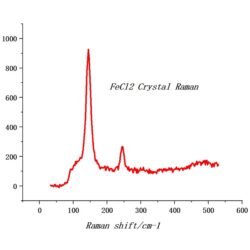
FeCl₂ Crystals
価格帯: ¥111,155 – ¥126,717 -
TiS₃ Crystals
価格帯: ¥104,486 – ¥200,081 -
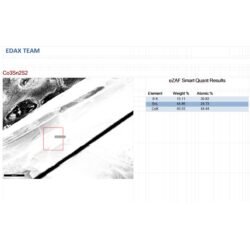
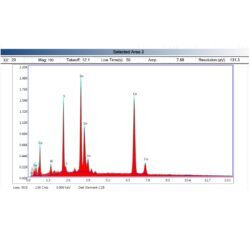
Co₃Sn₂S₂ Crystals
¥133,386 -
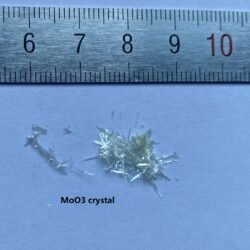
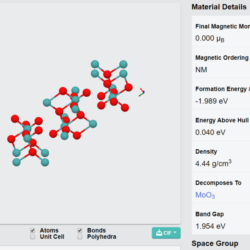
α-MoO₃ Crystals
価格帯: ¥102,262 – ¥111,155 -
FeBr₃ Crystals
価格帯: ¥104,486 – ¥111,155 -
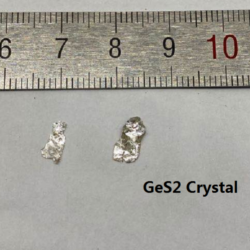
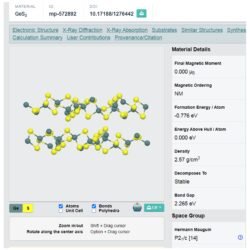
GeS₂ Crystals
価格帯: ¥111,155 – ¥133,386 -
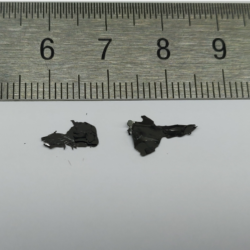
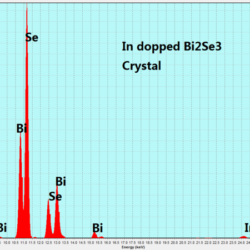
InBiSe₃ Crystals
価格帯: ¥111,155 – ¥200,081 -
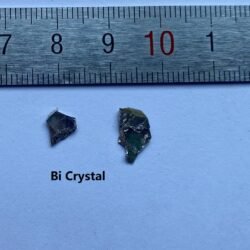
Bi Crystals
¥111,155 -
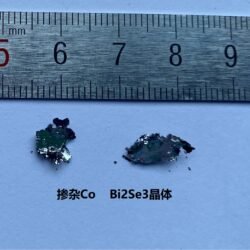
Co-Doped Bi₂Se₃ Crystals
¥111,155