
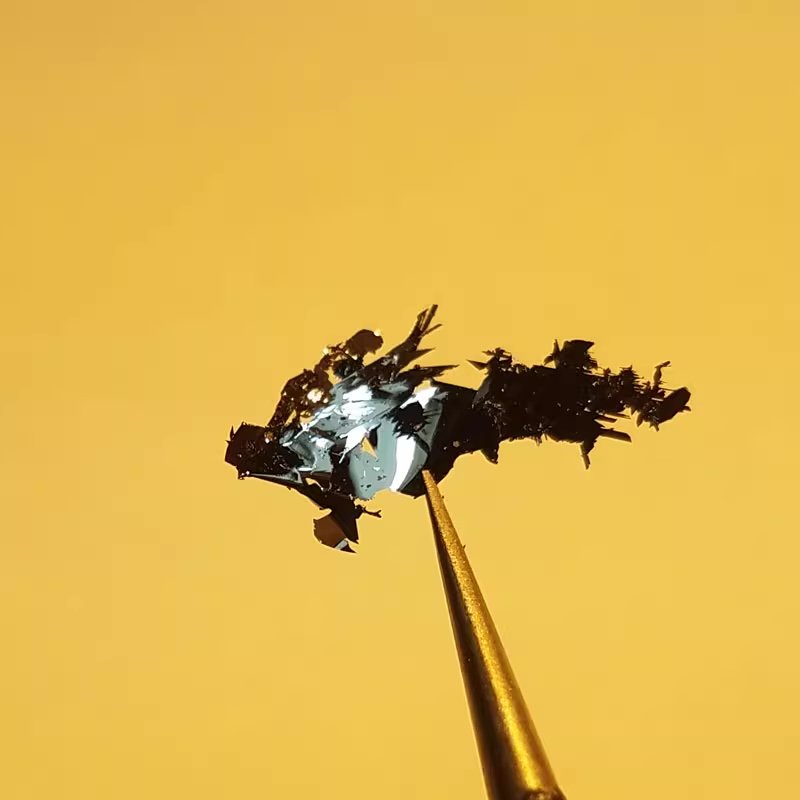
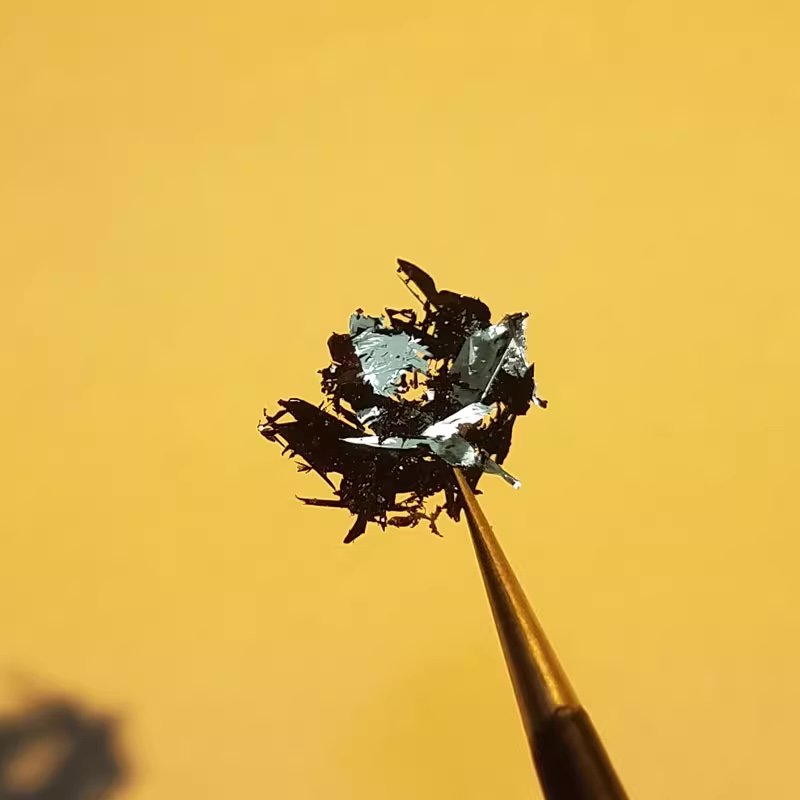
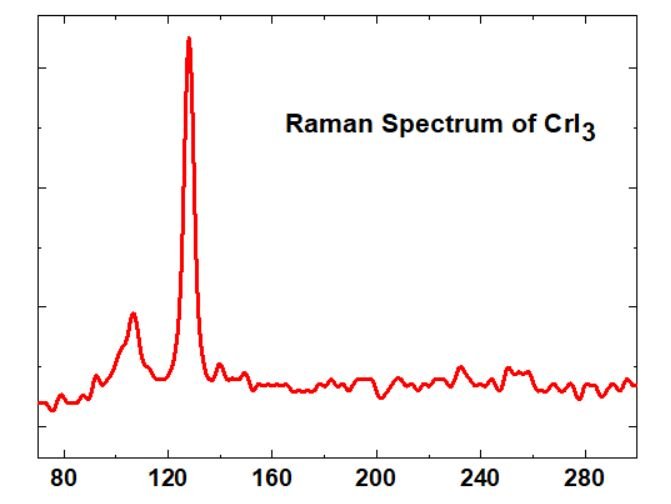
CrI₃ Crystals
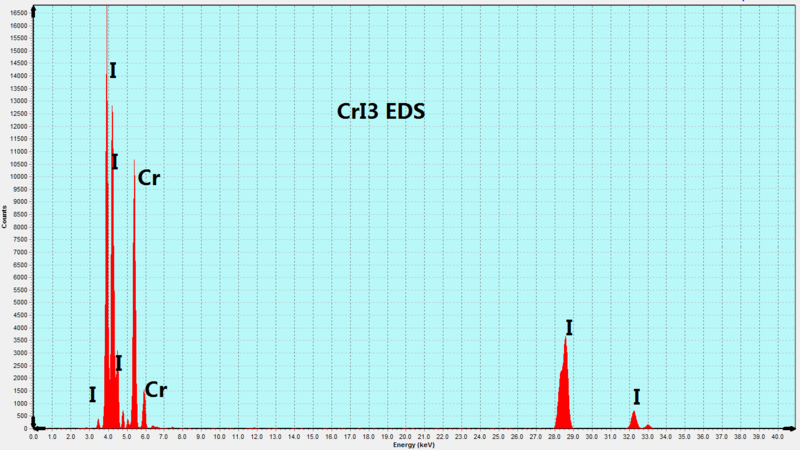
CrI₃ is a layered magnetic material with a van der Waals structure, has its intrinsic ferromagnetism in the monolayer and antiferromagnetic coupling in few-layer forms. It exhibits strong spin-orbit coupling, magnetic anisotropy, and high exfoliation properties, making it a key material for studying 2D magnetism, spintronics, and quantum materials. Our CrI₃ crystals are synthesized using the Chemical Vapor Transport (CVT) method, with high purity, precise stoichiometry, and strong crystallinity.
Sample Size Options:
Crystals larger than 10 mm²
Crystals larger than 25 mm²
Crystals larger than 100 mm²
Material Properties:
Layered van der Waals Structure: Permits easy exfoliation into monolayers or few-layer sheets for 2D materials research.
Intrinsic Ferromagnetism: Exhibits ferromagnetic ordering below ~61 K in bulk and ~45 K in monolayer form.
Strong Magnetic Anisotropy: Applicable to spintronic applications and magnetic memory devices.
High Spin-Orbit Coupling: Facilitates studies in quantum spin phenomena and magneto-optical effects.
Optical Transparency: Transparent in the visible spectrum, permits assembly into optoelectronic devices.
Crystal Structure:
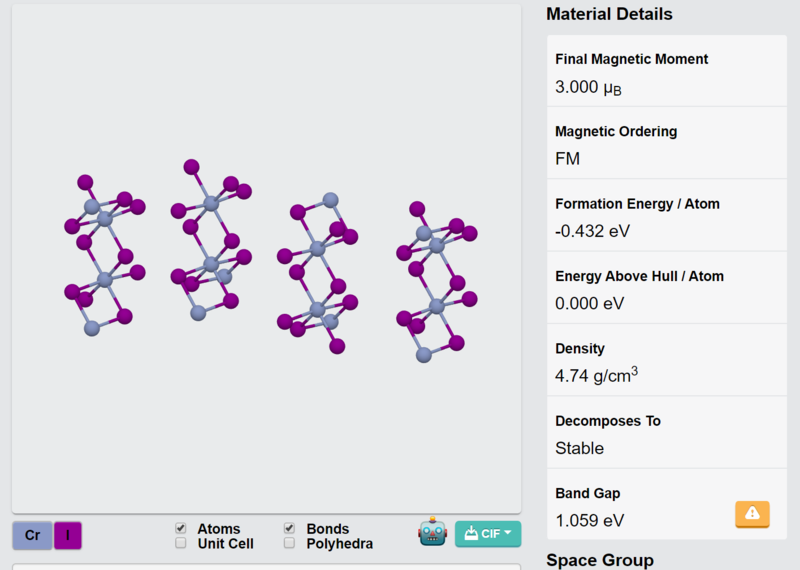
Type: Rhombohedral layered structure (space group R-3)
Features: Cleavable layers applicable for thin-film fabrication and nanoscale device research.
Degree of Exfoliation:
Ease of Use: Easily exfoliated into monolayers or few-layer nanosheets for 2D material studies and heterostructure assembly.
Other Characteristics:
2D Magnetism: Applicable for exploring low-dimensional magnetic phenomena and spin dynamics. Magneto-Optical Effects: Exhibits strong magneto-optical Kerr effects (MOKE) in thin layers.
Quantum Spin Research: Applicable to investigating quantum spin Hall effects and topological magnetic states.
Applications:
Spintronics:
High potential for spin-based memory devices, magnetic sensors, and spin valves. Quantum Materials Research:
Permits exploration of 2D ferromagnetism, magnetic anisotropy, and spin-lattice interactions. Optoelectronics:
Promising for magneto-optical devices, photodetectors, and light modulation technologies.
2D Material Studies:
Applicable for exfoliation into monolayers and assembly into van der Waals heterostructures. Sensors:
High sensitivity for magnetic, strain, and chemical sensing applications. Synthesis Method:
Chemical Vapor Transport (CVT): With quality crystals with purity, uniformity, and structural integrity.
| Option 1 | > 10 mm², > 100 mm², > 25 mm² |
|---|
Related products
-
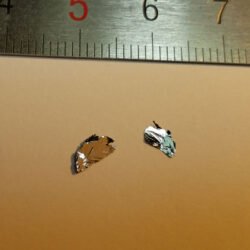
MoTe₂ Crystals (2H phase)
Price range: $696.09 through $793.55 -
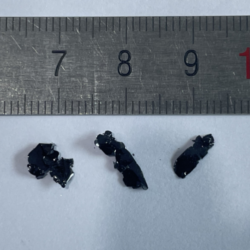
RuCl₃ Crystals
Price range: $696.09 through $1,252.98 -
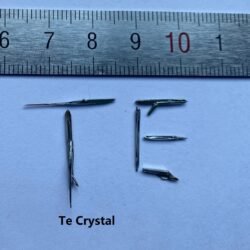
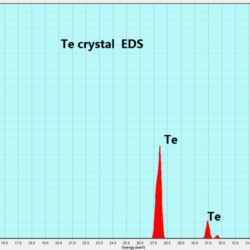
Te Crystals
$696.09 -
CrBr₃ Crystals
$696.09 -
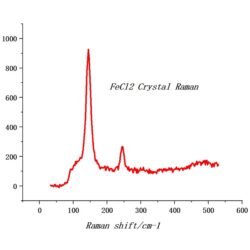
FeCl₂ Crystals
Price range: $696.09 through $793.55 -
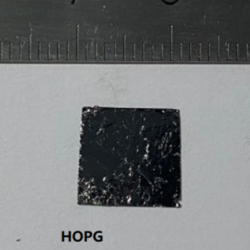
HOPG
$668.25 -
VS₂ Crystals
Price range: $696.09 through $793.55 -
TiS₃ Crystals
Price range: $654.33 through $1,252.98 -
VI₃ Crystals
Price range: $696.09 through $835.32 -

BiI₃ Crystals
Price range: $696.09 through $1,252.98