
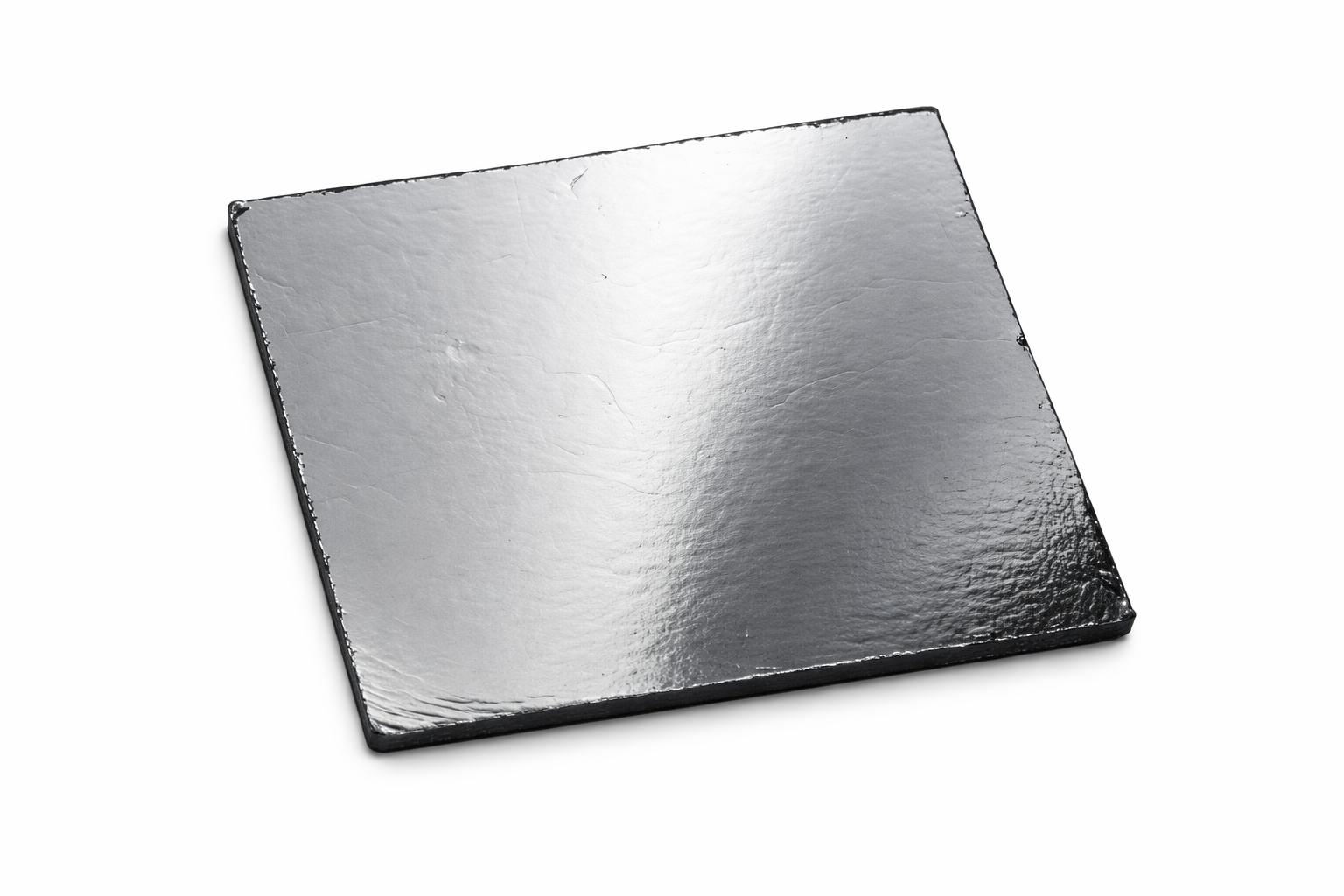
HOPG (Highly Oriented Pyrolytic Graphite) Sheets
Grades – ZYA / ZYB / ZYB-1
Highly Oriented Pyrolytic Graphite (HOPG) is a synthetic graphite crystal with extremely high crystallographic alignment along the c-axis. It is used as a standard substrate for surface science, STM/AFM imaging, graphene exfoliation, and thin film deposition.
HOPG has atomically flat surfaces after mechanical cleavage, with one of the most consistent reference materials for nanoscale and electronic studies.
Key Features
– Extremely low mosaic spread (down to 0.4°)
– Atomically smooth surface after cleaving
– High in-plane electrical conductivity
– High crystallographic orientation
– Repeatedly cleavable for fresh surfaces
– Applicable substrate for graphene exfoliation
Available Grades
ZYA Grade
Mosaic Spread: 0.4° ± 0.1°
Highest crystallographic alignment
Applicable to:
High-resolution STM
Surface physics research
Epitaxial growth
Precision graphene studies
ZYB Grade
Mosaic Spread: 0.8° ± 0.2°
High for general laboratory use
Applicable to:
Routine STM/AFM
Thin film deposition
Educational research
ZYB-1 Grade
Mosaic Spread: ~1.0°
Cost-functional option
Applicable to:
Teaching labs
General substrate applications
Typical Specifications
Material: Highly Oriented Pyrolytic Graphite
Surface: Flat, cleavable
Cleaving Method: Adhesive tape mechanical exfoliation
Electrical Property: High in-plane conductivity
Structure: Layered graphite crystal
Common Sizes:
10 × 10 × 1 mm
10 × 10 × 2 mm
12 × 12 × 2 mm
(Custom sizes available upon request)
Maximum available size: up to 50 × 50 mm
Applications
– Scanning Tunneling Microscopy (STM)
– Atomic Force Microscopy (AFM)
– Graphene mechanical exfoliation
– Thin film deposition substrate
– Surface adsorption studies
– Electronic transport studies
– Calibration standard for surface science
Why Choose High-Grade HOPG?
Lower mosaic spread means:
Specified crystallographic alignment
Larger single-domain regions
Modified surface flatness
Higher experimental reproducibility
For high-resolution research, ZYA grade (0.4°) is recommended.
| Option 1 | ZYA, 10 × 10 × 1 mm, ZYA, 10 × 10 × 2 mm, ZYA, 12 × 12 × 2 mm, ZYB-1, 10 × 10 × 1 mm, ZYB, 10 × 10 × 1 mm |
|---|